
By April L. Smith
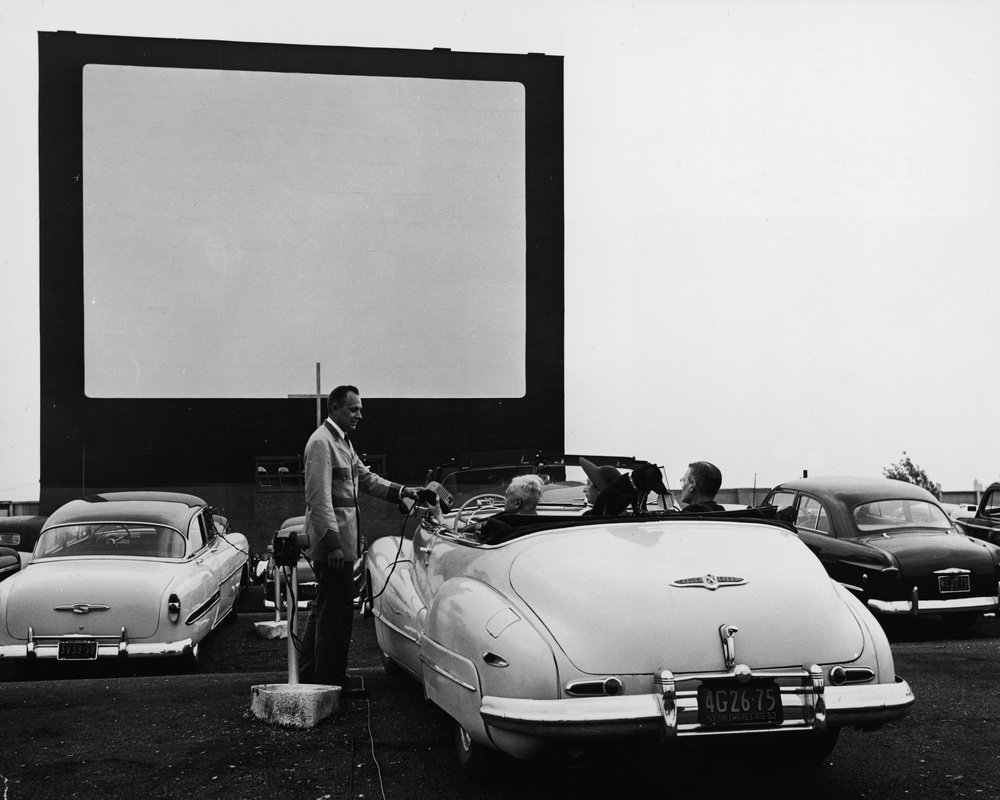
At the peak of their popularity, they numbered in the thousands. Now, only 350 drive-in theatres remain in the country. In her documentary film, Going Attractions: The Definitive Story of the American Drive-In, director April Wright travelled the US to find out what became of these rare venues. Featuring interviews with theatre owners and enthusiasts, sociologists, bloggers and film director, Roger Corman, the film gives a historical and cultural background that suggests the rise and fall of the drive-in has provided a narrative to the changes the country has undergone in the last fifty or so years. Going Attractions examines these historical events, exploring larger issues while evoking the feeling of each era through music. This film takes a pointed look at the ways in which the sense of community that existed in the early part of the 20th century was eroded in favor of modernity, rapidity and consumer culture.
A “fascination with unusual architecture and spectacle things” led April to explore the drive-in’s history. She acknowledges that drive-ins, these, “massive structures out in the middle of a field” are compelling and she became more curious about them as they began to crumble. Her road trip provided some answers. She travelled to all the states in the US, with the exception of Alaska (financial reasons prevented her from visiting there).Some trips she was accompanied by her teenaged niece, who acted as a production assistant. “I wasn’t seeing the country from an airport because most of the drive-ins that are left aren’t in major cities, so I really was driving across the country from little town to little town to little town and really seeing America from a different perspective. Travelling this way helped me understand the story, too, because when I was driving around I saw the commonality in the cities- how they were designed and how they grew. I saw the same kind of city planning over and over again all around the country and that helped me understand how the drive-ins fit into that development.”
This city planning led to the replacement of the drive-ins, unique structures with artwork on the back of their screens and neon lights on their marquees, with big-box stores- an architecture of sameness that has dominated the late 20th and early 21st centuries. That “drive-ins were already zoned with electricity and water, often at the intersection of two major freeways and very visible” proved too tempting for developers and corporations. Those “colorful and attractive signs, that showmanship was just a thing that people invested in that came out of the period of wealth and growth after World War II,” and when financial fortunes and public interest changed, “by the 80s there was just a cumulative effect-the invention of malls and chain retailers and suburban growth in general,” she says.
The film focuses on the battle between corporate control and the concerns of small businessmen and women. “The drive-ins only formed an association in the 90s so they never really communicated until the last ten or so years with the Internet. Most of the time they would be concerned with running their own businesses.” In some respects, they ended up defenseless against corporate onslaught. Another issue for the drive-in owner is the expense of updating their theatres, now a necessity due to theatres going digital. “They just switched in the last five, six, seven years to digital projection. That’s a major change in the industry. It’s been hard for drive-ins because each projector costs about $80,000. At a drive-in, there is an additional expense, because the projection booth is outside and susceptible to dust and dirt and the elements so they have to add the cost of building a climate-controlled, dust-free room to hold the digital projector. Most of the drive-ins are family owned and operated so they don’t have stockpiles of investment money. It is hurting the industry.”
Despite all these factors, April is hopeful for the future of the drive-in. “I think there’s this whole new interest in drive-ins and a resurgence in drive-in attendance. This year in particular, there are five or six brand new drive-ins being built from scratch or really old ones that have been closed for 30 years that are being reopened. People not only are attending drive-ins in record numbers, but are investing in new drive-ins.” Moreover, the drive-ins that have made the switch to digital now have a “picture that looks fantastic and no longer have to be concerned with residual light affecting the picture or the picture looking dark,” she says. Instead, digital projectors, “create the perfect picture like in an HDTV in your living room except you just put it on the biggest screens in the world at a drive-in. I think overall it’s going to help because it improves the quality of the picture so much.” These technological advancements are likely generating an interest in drive-ins amongst a new generation. “Most of the times when I’m screening the film, it’s younger people in their teens and twenties, rather than nostalgic baby boomers, who have more passion about it. They’ll tell me, this is the first time they’ve ever been to a drive-in, and how great it is to go to the drive-in, and they’ve got to support the drive-in and they want to own a drive-in. I get much more of an emotional response from younger people who feel upset about missing this.”
At the peak of their popularity, they numbered in the thousands. Now, only 350 drive-in theatres remain in the country. In her documentary film, Going Attractions: The Definitive Story of the American Drive-In, director April Wright travelled the US to find out what became of these rare venues. Featuring interviews with theatre owners and enthusiasts, sociologists, bloggers and film director, Roger Corman, the film gives a historical and cultural background that suggests the rise and fall of the drive-in has provided a narrative to the changes the country has undergone in the last fifty or so years. Going Attractions examines these historical events, exploring larger issues while evoking the feeling of each era through music. This film takes a pointed look at the ways in which the sense of community that existed in the early part of the 20th century was eroded in favor of modernity, rapidity and consumer culture.
A “fascination with unusual architecture and spectacle things” led April to explore the drive-in’s history. She acknowledges that drive-ins, these, “massive structures out in the middle of a field” are compelling and she became more curious about them as they began to crumble. Her road trip provided some answers. She travelled to all the states in the US, with the exception of Alaska (financial reasons prevented her from visiting there).Some trips she was accompanied by her teenaged niece, who acted as a production assistant. “I wasn’t seeing the country from an airport because most of the drive-ins that are left aren’t in major cities, so I really was driving across the country from little town to little town to little town and really seeing America from a different perspective. Travelling this way helped me understand the story, too, because when I was driving around I saw the commonality in the cities- how they were designed and how they grew. I saw the same kind of city planning over and over again all around the country and that helped me understand how the drive-ins fit into that development.”
This city planning led to the replacement of the drive-ins, unique structures with artwork on the back of their screens and neon lights on their marquees, with big-box stores- an architecture of sameness that has dominated the late 20th and early 21st centuries. That “drive-ins were already zoned with electricity and water, often at the intersection of two major freeways and very visible” proved too tempting for developers and corporations. Those “colorful and attractive signs, that showmanship was just a thing that people invested in that came out of the period of wealth and growth after World War II,” and when financial fortunes and public interest changed, “by the 80s there was just a cumulative effect-the invention of malls and chain retailers and suburban growth in general,” she says.
The film focuses on the battle between corporate control and the concerns of small businessmen and women. “The drive-ins only formed an association in the 90s so they never really communicated until the last ten or so years with the Internet. Most of the time they would be concerned with running their own businesses.” In some respects, they ended up defenseless against corporate onslaught. Another issue for the drive-in owner is the expense of updating their theatres, now a necessity due to theatres going digital. “They just switched in the last five, six, seven years to digital projection. That’s a major change in the industry. It’s been hard for drive-ins because each projector costs about $80,000. At a drive-in, there is an additional expense, because the projection booth is outside and susceptible to dust and dirt and the elements so they have to add the cost of building a climate-controlled, dust-free room to hold the digital projector. Most of the drive-ins are family owned and operated so they don’t have stockpiles of investment money. It is hurting the industry.”
Despite all these factors, April is hopeful for the future of the drive-in. “I think there’s this whole new interest in drive-ins and a resurgence in drive-in attendance. This year in particular, there are five or six brand new drive-ins being built from scratch or really old ones that have been closed for 30 years that are being reopened. People not only are attending drive-ins in record numbers, but are investing in new drive-ins.” Moreover, the drive-ins that have made the switch to digital now have a “picture that looks fantastic and no longer have to be concerned with residual light affecting the picture or the picture looking dark,” she says. Instead, digital projectors, “create the perfect picture like in an HDTV in your living room except you just put it on the biggest screens in the world at a drive-in. I think overall it’s going to help because it improves the quality of the picture so much.” These technological advancements are likely generating an interest in drive-ins amongst a new generation. “Most of the times when I’m screening the film, it’s younger people in their teens and twenties, rather than nostalgic baby boomers, who have more passion about it. They’ll tell me, this is the first time they’ve ever been to a drive-in, and how great it is to go to the drive-in, and they’ve got to support the drive-in and they want to own a drive-in. I get much more of an emotional response from younger people who feel upset about missing this.”






 RSS Feed